
Choosing IT services near Carol Stream starts with a practical question: what does your business need help with, and who will own that work? A nearby provider can be useful when equipment needs hands-on attention, but location alone does not tell you how support will be delivered.
Compare providers using your systems, working arrangements and business priorities. The goal is an agreement that explains how users get help, how ongoing tasks are handled and what happens when something requires an on-site visit.
Start with the problems you want to solve
Make a short list of recurring issues and planned changes before requesting a proposal. Include the impact on staff, not just the technical symptom. A connection that drops during appointments, for example, raises different questions from a computer that is slow only at startup.
- Which issues interrupt work most often?
- Which applications are essential to serving customers?
- How many people work in the office, remotely or across locations?
- Which equipment or software will need replacement soon?
- Which technology tasks currently have no clear owner?
Share that list with each provider so you can compare proposals against the same needs. Otherwise, two attractive quotations may cover very different work.
Ask how remote and on-site support fit together
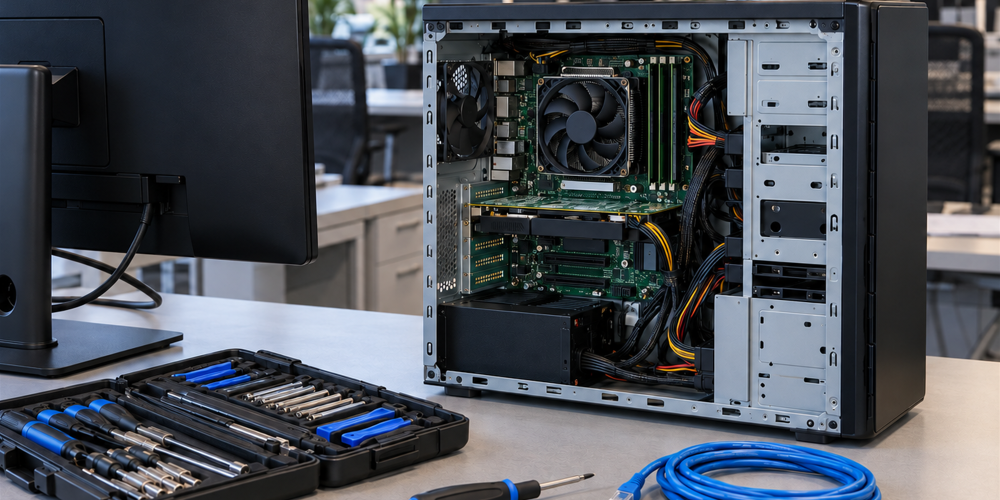
Remote support may suit many account, application and configuration questions. Physical equipment, cabling and some network problems can require someone at the location. Ask how the provider determines the next step and how visits are scheduled.
For a business near Carol Stream, confirm coverage for your actual address, working hours and equipment. Ask whether travel or on-site work is included, separately billed or subject to other arrangements. Proximity should support a clear service process rather than stand in for one.
Avanti offers on-site IT support alongside its broader business IT services. Its Areas We Serve page lists the nearby communities covered by the site.
Look beyond fixing the immediate issue
A repair can solve today’s interruption while leaving a recurring cause untouched. Ask whether the provider records the issue, identifies patterns and recommends follow-up work. Also ask who reviews systems when there is no open support request.
If you want continuing maintenance and support, compare the scope of managed IT services. Our MSP guide explains that model and how it can work alongside internal staff.
Make security and backup responsibilities specific
A proposal should tell you which security and backup tasks are included. Ask who reviews alerts, checks backup results and leads a recovery test. Find out what information your business receives about unresolved issues.
Also review provider access. Which accounts will technicians use? Who approves changes? How is access removed when it is no longer needed? These questions matter whether the provider is local or remote.
Compare the working relationship, not just the monthly figure
- Scope: covered users, devices, applications and locations.
- Support: hours, request channels and escalation arrangements.
- Visits: scheduling, travel and on-site charges.
- Projects: how migrations, replacements and new installations are quoted.
- Documentation: ownership of inventories, credentials and configuration records.
- Exit: how information and access are handed over if the agreement ends.
For an illustrative office planning a move, day-to-day help desk support and relocation work should be discussed separately. Confirm who coordinates equipment, internet service and testing before the move becomes urgent.
Bring a useful brief to the first conversation
You do not need a perfect technical inventory to begin. Bring your issue list, essential applications, working arrangements and upcoming changes. A productive conversation should leave you with clearer priorities and a defined next step.
Let’s Talk about a solution for your IT needs
Explore Avanti’s Carol Stream IT services page or contact Avanti to discuss your business’s priorities.